"Pakistan Defence Minister khawaja Asif Threat to Kolkata"
A Fresh Escalation in Familiar Rhetoric
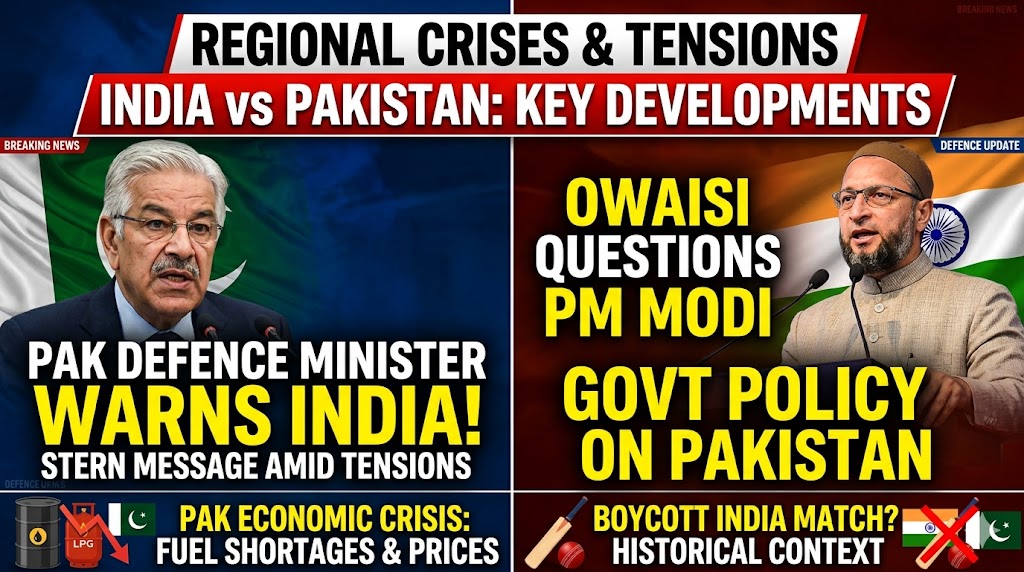
In the volatile landscape of India-Pakistan relations, rhetorical fireworks are not uncommon. Yet, when Pakistan’s Defence Minister Khawaja Asif publicly declared on April 4, 2026, that his country would “take it to Kolkata” if India attempted any “false flag operation,” it sent ripples across both nations. Speaking to reporters in Sialkot, Asif’s words were a direct rejoinder to Indian Defence Minister Rajnath Singh’s recent assertion of “unprecedented and decisive” action against any Pakistani misadventure.
This latest exchange fits into a long pattern of cross-border posturing. But it raises pointed questions: Why invoke Kolkata—a major Indian metropolis far from the traditional western border? What drives such threats amid Pakistan’s ongoing economic struggles, including fuel shortages and oil price shocks? And how does this rhetoric serve domestic or strategic purposes? This article examines the context, implications, and underlying factors with a professional lens, drawing on verified reports while avoiding speculation.
The Statement in Context: What Khawaja Asif Actually Said
Pakistan’s Defence Minister Khawaja Asif, a senior figure in the current government and one of the key ministers of Pakistan handling defence matters, did not announce an unprovoked plan to attack or “acquire” any Indian territory. His remarks were conditional and framed as defensive retaliation:
- “If India tries to stage any false flag operation this time, then God-willingly, we will take it to Kolkata.”
- He referenced alleged Indian tactics involving detained individuals or planted incidents to justify escalation.
This came days after Rajnath Singh warned of firm Indian resolve following heightened tensions, possibly linked to the anniversary of the 2025 Pahalgam terror attack. Asif had earlier described Pakistan’s response to any aggression as “swift, calibrated, and decisive.”
Indian leaders, including responses from figures like Asaduddin Owaisi (who has previously criticized PM Modi on security and foreign policy matters), and broader political discourse, have viewed such statements as provocative. Yet, Pakistani officials maintain they seek peace while reserving the right to defend sovereignty.
Notably, there is no credible evidence in public reporting of any Pakistani operational plan to “enter through Kolkata” or seize the city. Kolkata lies deep within Indian territory, over 1,800 km from the Pakistan border and adjacent to Bangladesh. Such a scenario would require crossing multiple sovereign spaces and represents a massive escalation far beyond conventional rhetoric.
Historical Pattern of Threats and Responses
India-Pakistan tensions have seen similar verbal escalations before:
- Past Pakistani officials have referenced strikes on distant Indian cities (e.g., former envoy Abdul Basit’s hypothetical comments on Mumbai and Delhi in other contexts).
- Cricket diplomacy has also been a flashpoint. In early 2026, Pakistan briefly threatened to boycott an India match at the T20 World Cup in solidarity with Bangladesh but ultimately withdrew after negotiations.
These episodes illustrate how rhetoric often serves to signal resolve without immediate military intent. Asif’s mention of Kolkata appears calculated to demonstrate that any future conflict would not be confined to border regions but could theoretically reach deeper into India— a classic deterrence message.
Why Kolkata? Strategic Symbolism Over Practicality
The choice of Kolkata is intriguing and merits analysis, not alarmism:
- Geographic Reach: By naming a city in eastern India, Asif underscores that Pakistan’s claimed retaliatory capacity extends far beyond Punjab or Rajasthan. It projects long-range strike potential, whether through missiles, proxies, or other means.
- Symbolic Value: Kolkata represents India’s cultural, economic, and demographic heartland. As the capital of West Bengal and a major port, it symbolizes national unity. Targeting it rhetorically amplifies psychological impact.
- No Evidence of “Entry” or Acquisition Plans: Claims of Pakistan “trying to enter through Kolkata and acquire” the city lack any basis in intelligence reports or official statements. Such an operation would be logistically impossible without triggering full-scale war, international isolation, and economic collapse for Pakistan.
Analysts note that this language echoes past patterns where threats are designed to deter perceived Indian “false flags” rather than initiate aggression. India’s eastern command remains vigilant, but no unusual troop movements tied specifically to this rhetoric have been reported.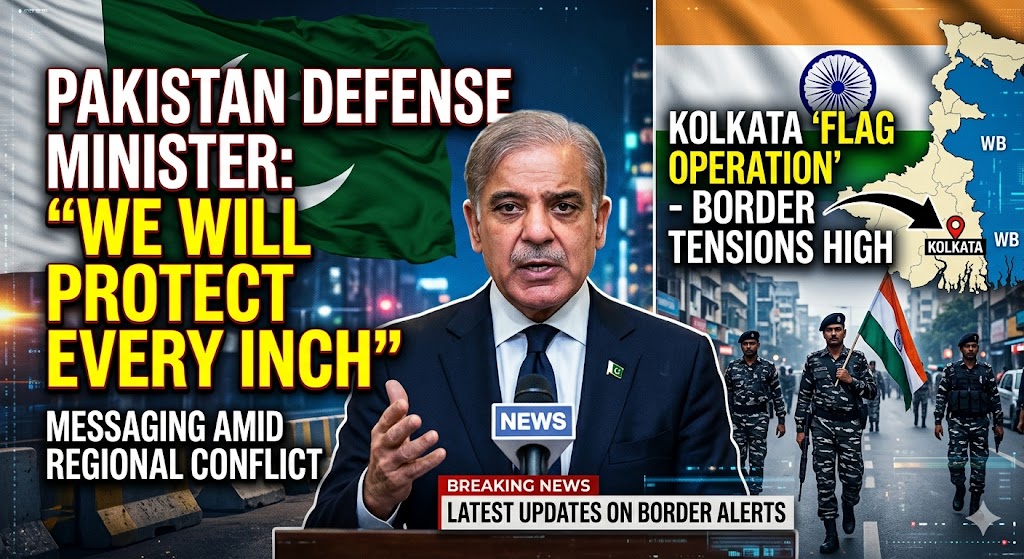
Pakistan's Defence Minister Threatens Kolkata Over Potential False Flag Operation
Pakistan’s Economic Crisis: Fuel Shortages, Oil Shock, and Why Threats Persist
Pakistan faces severe economic headwinds that make large-scale conflict highly risky. Yet, domestic political pressures often lead to defiant external posturing.
Key Economic Challenges (as of April 2026):
- Oil and Fuel Crisis: Pakistan imports over 80% of its oil. Disruptions from the ongoing Middle East conflicts (including U.S.-Israel actions involving Iran) have triggered supply issues in the Strait of Hormuz. Petrol prices surged sharply in March 2026 (e.g., Rs55/litre hike in some reports), causing queues and public frustration. The government imposed austerity and fuel conservation measures.
- LNG and Energy Woes: A surplus of LNG cargoes exists due to subdued demand from solar growth and low GDP, yet circular debt in the gas sector exceeds PKR 3.3 trillion. Diversions to domestic use add financial strain.
- Broader Stagflation Risks: Inflation is rising amid fuel shocks. GDP growth remains subdued, with second-round effects on wages, exports, and consumer confidence. Austerity announcements by PM Shehbaz Sharif highlight the fragility.
Why threaten India despite these pressures?
- Domestic Politics: Rhetoric rallies nationalist support and diverts attention from internal woes. Ministers of Pakistan, including defence figures like Asif, often use strong language to project strength.
- Deterrence Strategy: Pakistan’s doctrine emphasizes credible minimum deterrence vis-à-vis India. Threats serve as signaling without requiring immediate action.
- Historical Precedent: Economic crises have not always muted military rhetoric; they sometimes amplify it to unify the public.
- External Factors: Regional alliances and perceived Indian assertiveness (e.g., responses to past incidents) fuel the cycle.
In short, threats like Asif’s are more about perception management than operational feasibility. Launching war while grappling with LPG/oil shortages and inflation would be self-defeating.
India has responded measuredly. Rajnath Singh’s statements emphasize readiness without escalation. Political voices, including Asaduddin Owaisi’s past calls for firm action against terrorism, reflect a cross-party consensus on national security.
Broader discourse in India highlights Pakistan’s pattern of denial and deflection. No mainstream Indian analysis interprets Asif’s words as a literal blueprint for invading Kolkata. Instead, they are seen as part of the “predictable pattern” Asif himself referenced in earlier remarks.
Broader Implications for Regional Stability
- Risk of Miscalculation: Heightened rhetoric increases the chance of accidental escalation, especially around sensitive anniversaries or cricket events.
- Economic Interdependence: Both nations suffer from conflict. Pakistan’s crisis deepens with any prolonged tension; India prioritizes growth and stability.
- International Angle: Global powers urge restraint. Past boycotts (e.g., the resolved T20 World Cup standoff) show how diplomacy can de-escalate sporting-political flashpoints.
Conclusion: Rhetoric vs. Reality
Khawaja Asif’s Kolkata warning is the latest chapter in a decades-old script of threat and counter-threat. It does not signal an imminent Pakistani plan to “initiate war again,” “enter through Kolkata,” or “acquire” the city. Rather, it reflects defensive posturing amid economic strain from oil and LPG crises.
Pakistan’s leaders face a difficult balancing act: projecting strength while managing domestic fragility. India, for its part, maintains strategic restraint backed by capability. True resolution lies in dialogue, not distant threats.
As tensions simmer, observers on both sides would do well to focus on verifiable facts over sensational headlines. Peace remains in the interest of 1.4 billion Indians and 240 million Pakistanis alike.